

What is high barrier flexible packaging? If you have ever opened a bag of coffee that still smelled fresh six months after roasting, or a pouch of beef jerky that tasted exactly as it should, you have experienced the answer firsthand. High barrier flexible packaging is a category of flexible packaging engineered to block the transmission of oxygen, moisture, light, and aroma—the four environmental factors that degrade food quality and shorten shelf life. For brand owners in food, coffee, pet food, and pharmaceuticals, high barrier flexible packaging is not a premium option. It is the foundation of product integrity and consumer trust.
This guide explains what high barrier flexible packaging is, how it works, what materials deliver barrier performance, how to compare barrier solutions on cost and recyclability, and how to select the right structure for your product.

What Is High Barrier Flexible Packaging? Definition and Performance Metrics
High barrier flexible packaging is defined by measurable performance thresholds, not by marketing claims. The most commonly cited benchmark defines a high barrier film as one with an oxygen transmission rate (OTR) of less than 10 cc/m²/24 hrs. Ultra-high barrier films achieve OTR values below 0.1 cc/m²/24 h/atm at 23°C and 50% relative humidity.
Two metrics define barrier performance:
Oxygen Transmission Rate (OTR) measures how much oxygen passes through a given area of film per day. Oxygen causes oxidation, rancidity, vitamin loss, and color change in food. For coffee, meat, and high-fat products, low OTR is critical.
Water Vapor Transmission Rate (WVTR) measures how much moisture passes through the film. Moisture causes texture degradation, caking in powders, and microbial growth. For dry foods, biscuits, and powdered beverages, low WVTR is essential.
The global high-barrier flexible packaging market was valued at $16.8 billion in 2026 and is projected to reach $28.4 billion by 2034, growing at a CAGR of 6.8%. This growth reflects rising demand for extended shelf life, clean-label products with fewer preservatives, and e-commerce grocery channels that expose packaging to temperature fluctuations.
High Barrier Flexible Packaging Characteristics: What Sets It Apart
High barrier flexible packaging characteristics go beyond barrier performance. Understanding these characteristics helps brand owners evaluate whether a given structure will perform in real-world conditions.
Multi-layer construction. High barrier structures typically combine three or more functional layers: an outer print layer for strength and graphics, a barrier layer for oxygen and moisture protection, and an inner sealant layer for heat-sealability and food contact. Each layer contributes a specific function that no single material can replicate alone.
Flex durability. A high barrier film must maintain its barrier performance after forming, filling, and handling. Barrier coatings can crack under flexing, creating pathways for oxygen and moisture. Industry-standard Gelbo flex testing simulates this stress. An 8-stack nanolaminate coating on PET retained WVTR below 0.005 g/m²/24hr even after 50 tensile bending cycles.
Thermal stability. For retort and hot-fill applications, the barrier structure must survive sterilization temperatures of 121°C to 135°C without delaminating or losing seal integrity.
Seal integrity. Even the best barrier film fails if the seal leaks. Seal strength, seal width, and seal contamination resistance are critical characteristics that determine real-world shelf life.
Printability and shelf appeal. Barrier films must accept high-quality printing without compromising barrier performance. Surface treatment and coating selection affect ink adhesion and print resolution.
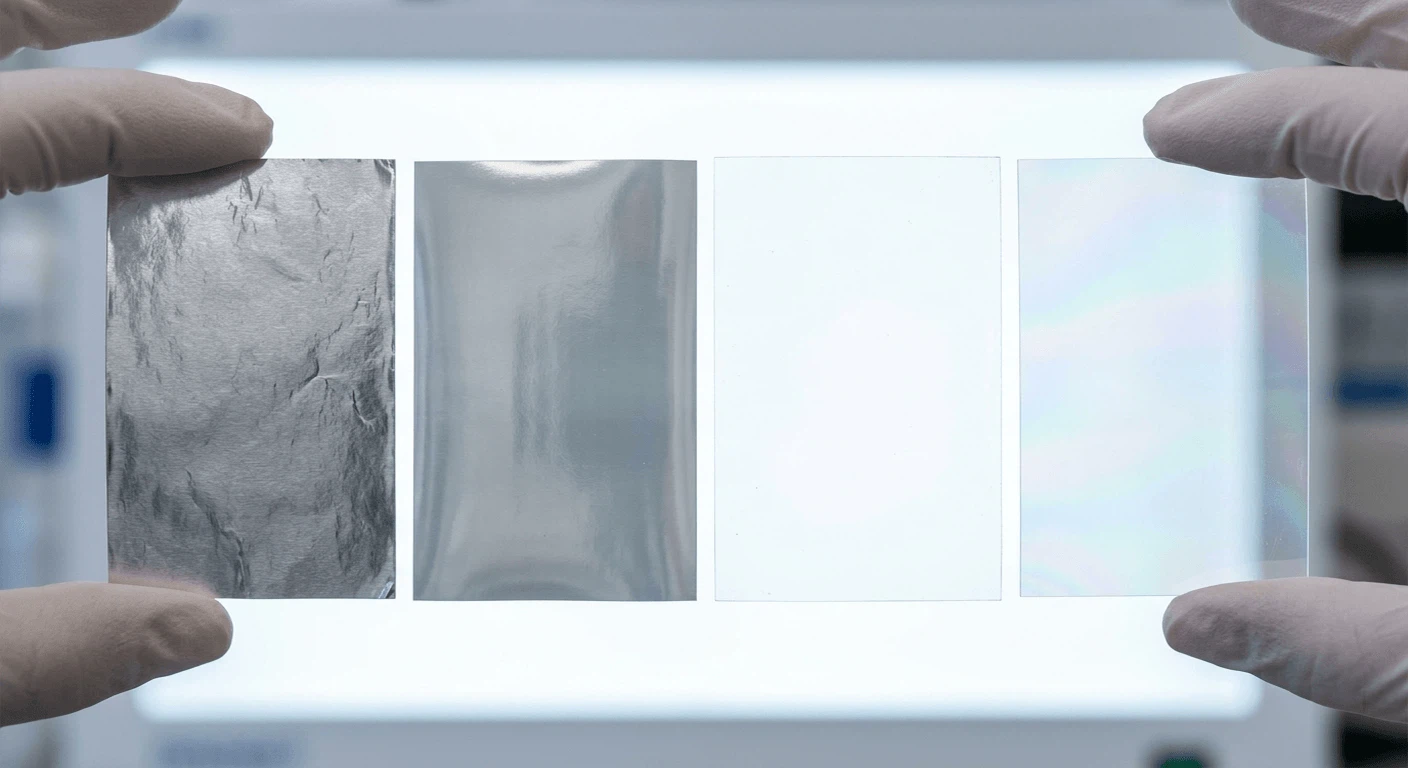
Barrier Material Options: EVOH, PVDC, Aluminum Foil, and Metallized Films
The choice of barrier material determines performance, cost, and recyclability. This comparison is essential for procurement decisions.
EVOH (Ethylene Vinyl Alcohol)
EVOH is the most widely used transparent high-barrier polymer. It offers excellent oxygen barrier—EVOH 29 mol% has an oxygen permeability of 0.02 cc·mil/100 in²·day·atm, the lowest among common polymers. However, EVOH is moisture-sensitive. Its oxygen barrier degrades at high humidity, so it must be buried between moisture-resistant layers (typically PE) in a multi-layer structure. A study on PATS-processed films found that increasing EVOH layer thickness by 16.7% reduced OTR by 22.3%.
Typical OTR: 0.1–1.0 cc/m²/24hr (depending on thickness and humidity)
Cost: Medium-high
Recyclability: Compatible with PE-based mono-material structures when used as a thin tie layer
PVDC (Polyvinylidene Chloride)
PVDC is one of the oldest barrier materials, first used on cellophane. It provides excellent oxygen and moisture barrier simultaneously, with OTR below 1.0 cc/m²/24hr. PVDC is thermoformable and transparent. Its main limitation is environmental: PVDC contains chlorine and can release hydrochloric acid during incineration, which has led to regulatory pressure in some markets.
Typical OTR: <1.0 cc/m²/24hr
Cost: Medium
Recyclability: Poor; chlorine content complicates recycling
Aluminum Foil
Aluminum foil provides a near-absolute barrier to oxygen, moisture, and light. Its OTR and WVTR approach zero. Aluminum foil also offers deadfold ability—it stays folded when bent, which is useful for twist wraps and certain pouch formats. The limitations are opacity (no product visibility), flex-cracking (foil can develop pinholes when flexed), and recyclability (multi-material laminates containing foil are difficult to recycle).
Typical OTR: ~0 cc/m²/24hr
Cost: Medium
Recyclability: Poor in multi-material laminates; aluminum is recyclable if separated
Metallized Films (Met-PET, Met-BOPP, Met-PE)
Metallized films use a thin vacuum-deposited aluminum layer on a polymer substrate. They offer barrier performance between transparent films and foil, with better flex-crack resistance than foil. Recent innovations include mono-material metallized PE sealant films that deliver barrier performance comparable to metallized OPP or metallized PET while remaining eligible for store drop-off recycling.
Typical OTR: 0.5–5 cc/m²/24hr
Cost: Low-medium
Recyclability: Good when used in mono-material structures
Metal Oxide Coatings (AlOx, SiOx)
Metal oxide coatings deposit a thin ceramic layer (aluminum oxide or silicon oxide) on a polymer substrate. They offer transparency, high barrier, and microwaveability. Multi-layer AlOx coatings on PET have demonstrated ultra-low OTR and WVTR even after pressure-assisted thermal sterilization.
Typical OTR: <1 cc/m²/24hr
Cost: Medium-high
Recyclability: Good; minimal material added (<0.4 wt%)
Comparison Table
| Barrier Material | Typical OTR (cc/m²/24hr) | WVTR (g/m²/24hr) | Transparent | Recyclability | Cost Index |
|---|---|---|---|---|---|
| EVOH | 0.1–1.0 | 1–5 | Yes | Good (mono-material) | 1.2 |
| PVDC | <1.0 | <1.0 | Yes | Poor | 1.0 |
| Aluminum foil | ~0 | ~0 | No | Poor (multi-material) | 1.0 |
| Metallized film | 0.5–5 | 0.5–2 | No | Good (mono-material) | 0.8 |
| AlOx/SiOx coating | <1.0 | <1.0 | Yes | Good | 1.3 |
Cost index is indicative; actual pricing depends on volume, structure complexity, and supplier.
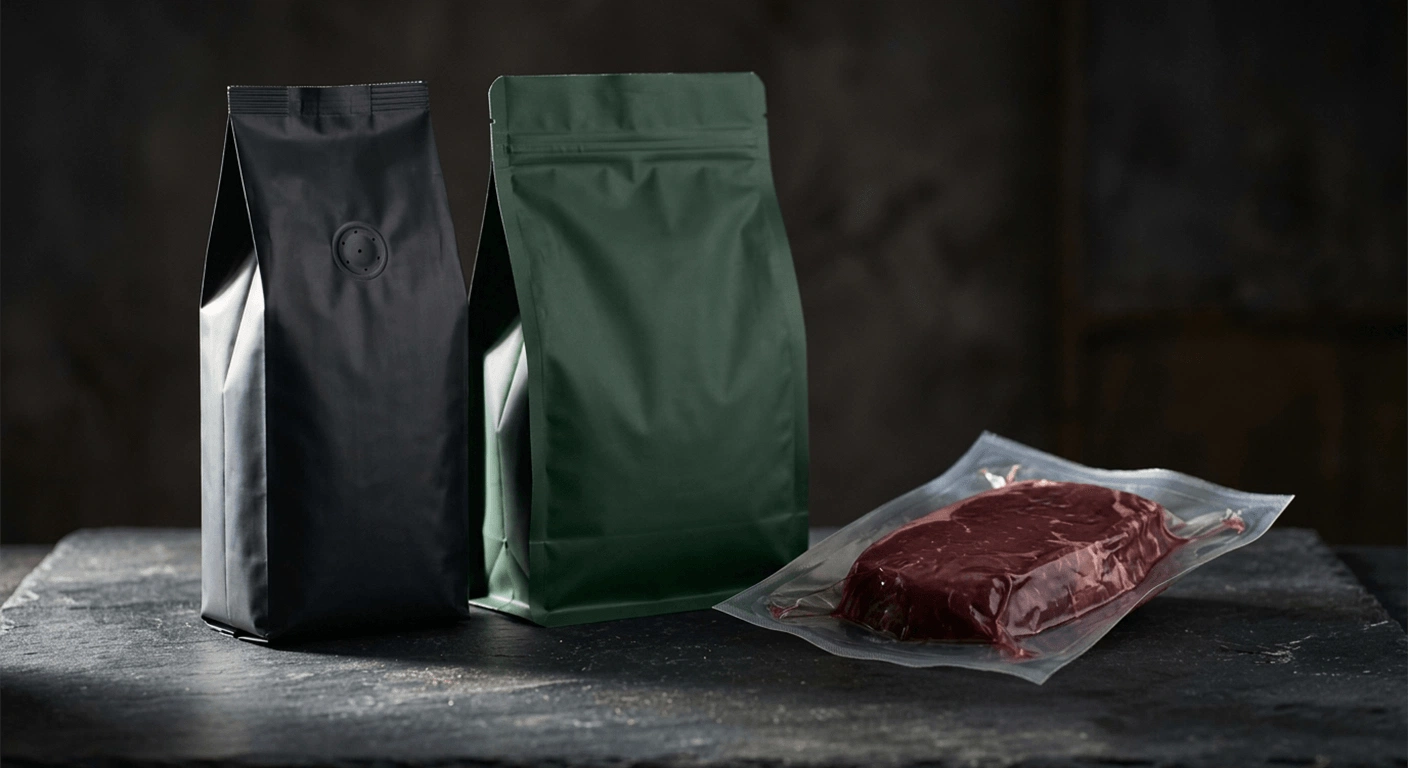
Applications: Where High Barrier Flexible Packaging Is Essential
Coffee packaging. Coffee beans and ground coffee are highly sensitive to oxygen and moisture. High barrier flexible packaging with one-way degassing valves preserves aroma and prevents staleness. Metallized PET and aluminum foil structures are common, with mono-material PE alternatives emerging for recyclability.
Pet food. Dry pet food requires moisture and oxygen barrier to preserve kibble texture and fat stability. Wet pet food uses retort pouches that must survive high-temperature sterilization while maintaining barrier performance.
Meat and protein. Fresh and processed meat requires oxygen barrier to prevent oxidation and discoloration. Vacuum pouches and modified atmosphere packaging use EVOH or PVDC barrier layers.
Dry foods and snacks. Biscuits, nuts, and powdered beverages need moisture barrier to prevent caking and texture loss. Metallized BOPP films with OTR and WVTR as low as 0.1 are used for dry and high-fat foods.
Pharmaceuticals. Blister lidding and strip packs require high barrier against moisture and oxygen to protect drug stability. PCTFE and Aclar films are used for moisture-sensitive formulations.
Cost vs. Performance: How to Choose the Right Barrier Level
Selecting a barrier structure is a cost-performance optimization. Not every product needs ultra-high barrier.
High-barrier products (coffee, meat, pharmaceuticals) require OTR below 1 cc/m²/24hr. These typically use EVOH, foil, or metal oxide coatings. Cost is higher, but shelf life and product quality justify the investment.
Medium-barrier products (dry snacks, biscuits, confectionery) require OTR between 1 and 10 cc/m²/24hr. Metallized films are often sufficient. Cost is moderate, and recyclability is improving with mono-material options.
Low-barrier products (fresh produce, short shelf-life items) may not need a dedicated barrier layer. Standard PE or PP films suffice.
The cost difference matters. Mono-material metallized PE films can cut costs 25% to 60% compared to multilayer structures while meeting circular packaging goals. For brands under extended producer responsibility (EPR) pressure, this cost saving is significant.
Sustainability: Recyclable High Barrier Flexible Packaging
The barrier industry is shifting toward recyclable solutions. Traditional high barrier structures use multi-material laminates that are difficult to recycle. Mono-material designs replace these with compatible polymers.
Mono-material PE with nanoclay. HyperBarrier PE film offers 300x oxygen barrier improvement over typical PE film in an all-PE structure that is recyclable. The technology uses high cation exchange capacity nanoclays, extensive exfoliation, and platelet orientation to achieve barrier performance in a monolayer film.
Graphene oxide coatings. Applying graphene oxide and graphene oxide/montmorillonite hybrid coatings on polyolefin substrates reduced oxygen permeability by 94–99% and water vapor permeability by 68–73%, with easy recyclability demonstrated through reprocessing tests.
Metal oxide nanolaminates. An 8-stack nanolaminate coating on PET achieved WVTR below 0.005 g/m²/24hr and OTR below 10 cc/m²/24hr, with minimal material added (<0.4 wt%), facilitating recycling and composting.
These innovations mean that brands no longer have to choose between barrier performance and recyclability. The trade-off is narrowing.
How Jili Packaging Supports High Barrier Flexible Packaging Projects
At Jili Packaging, we have been manufacturing flexible packaging since 2000. Our team understands that high barrier flexible packaging is not a catalog product—it is an engineering solution matched to your product’s specific sensitivity, shelf-life target, and distribution conditions.
Our capabilities include:
-
Barrier material selection: EVOH, metallized films, aluminum foil, metal oxide coatings, and mono-material recyclable structures
-
Multi-layer lamination: Solvent-free lamination with precise adhesive selection for barrier integrity
-
Barrier testing: In-house OTR and WVTR testing, seal strength validation, and flex durability assessment
-
Custom structures: From standard three-ply laminates to advanced mono-material barrier films
-
Application expertise: Coffee, pet food, meat, dry foods, liquids, and high-temperature retort applications
We work with brands at every stage—from initial material consultation to prototype testing and mass production. Whether you need a standard high barrier coffee pouch, a retort pouch for wet pet food, or a recyclable mono-material structure for EPR compliance, we can engineer the packaging that fits.
If you are evaluating high barrier flexible packaging for your product, contact our technical team to discuss your barrier requirements and request samples.
Final Thoughts
High barrier flexible packaging is defined by measurable performance, not marketing language. Understanding OTR, WVTR, material options, and the cost-recyclability trade-off empowers brand owners to make procurement decisions based on facts. Whether you choose EVOH for transparency, foil for absolute barrier, or a mono-material PE structure for recyclability, the right barrier solution protects your product, extends shelf life, and supports your sustainability goals.
Contact Jili Packaging today to discuss your high barrier flexible packaging requirements.


