
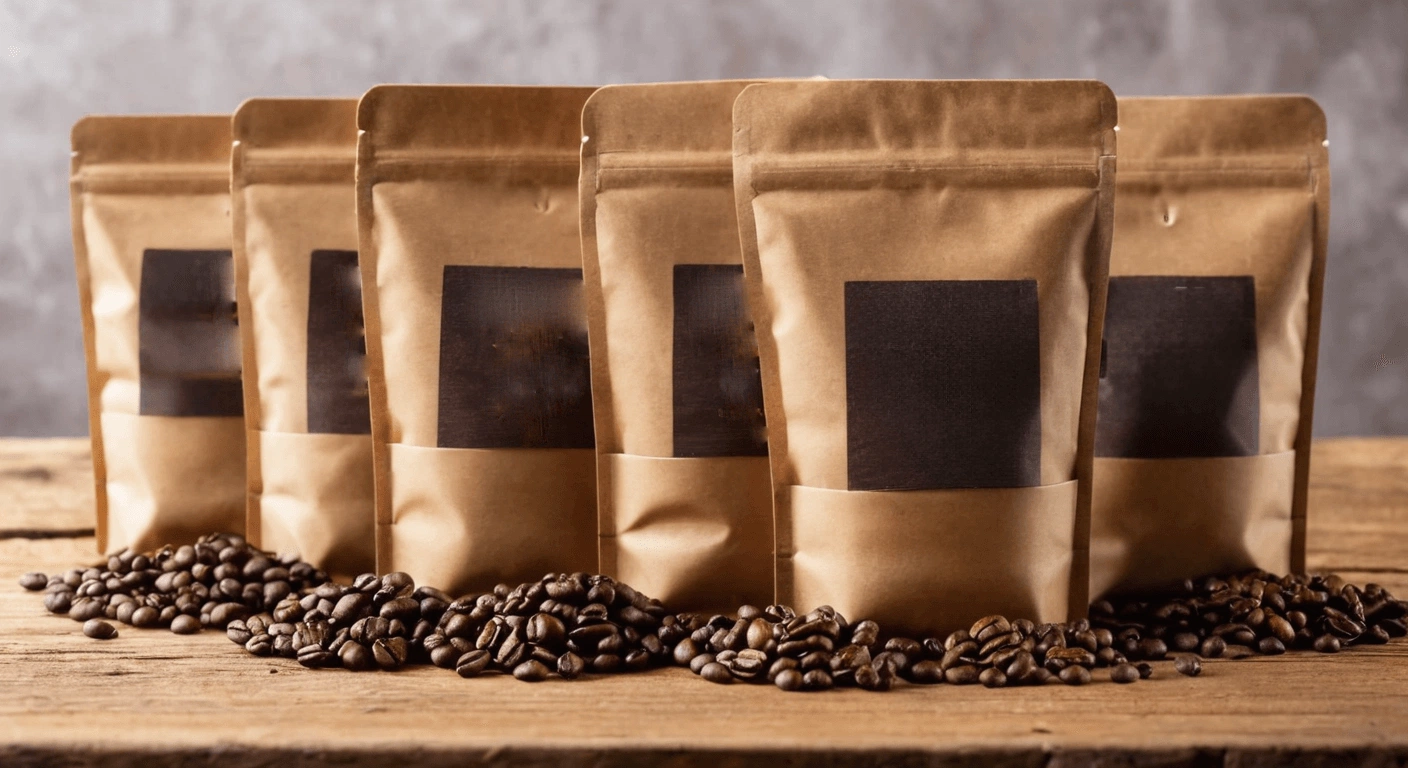
Whether you are sourcing standard custom coffee bags for a new roast or designing high-barrier structures for long-distance export, understanding the protective challenges is the first step. This article breaks down the environmental threats to coffee, how different barrier materials respond, and how to design a structure that protects flavor while meeting your sustainability goals.
Protective Challenges in Flexible Packaging Coffee Structure Barrier Films
To select the right materials for your custom coffee packaging, you must first understand what you are fighting against. Coffee degrades through four primary mechanisms: oxidation, moisture ingress, aroma loss (and external odor ingress), and carbon dioxide release.
1. Oxygen Transmission (OTR)
Oxygen is the primary enemy of roasted coffee. The lipids (fats) on the surface of the bean react with oxygen, causing rapid oxidation. This process turns fresh, fruity, or chocolatey notes into stale, cardboard-like flavors. The Oxygen Transmission Rate (OTR) measures how much oxygen passes through a film over a given period. For premium custom coffee bean bags, the OTR needs to be exceptionally low to extend shelf life beyond a few weeks.
2. Moisture Vapor Transmission (WVTR)
Moisture is the second critical threat. Coffee is hygroscopic, meaning it readily absorbs moisture from the air. When moisture levels rise, the beans lose their crispness, and soluble powders (like instant coffee) clump. Furthermore, excess moisture accelerates the staling process and can lead to mold growth. A high-quality custom printed coffee bag must maintain a strict moisture barrier.
3. Aroma Barrier and Odor Ingress
Coffee’s volatile organic compounds (VOCs) give it its signature smell. If the packaging film is not a strong barrier, these compounds escape, and the coffee smells flat. Conversely, the package must prevent external odors from entering—coffee sitting next to a strong-smelling product in a warehouse should not absorb those odors.
4. Carbon Dioxide Degassing
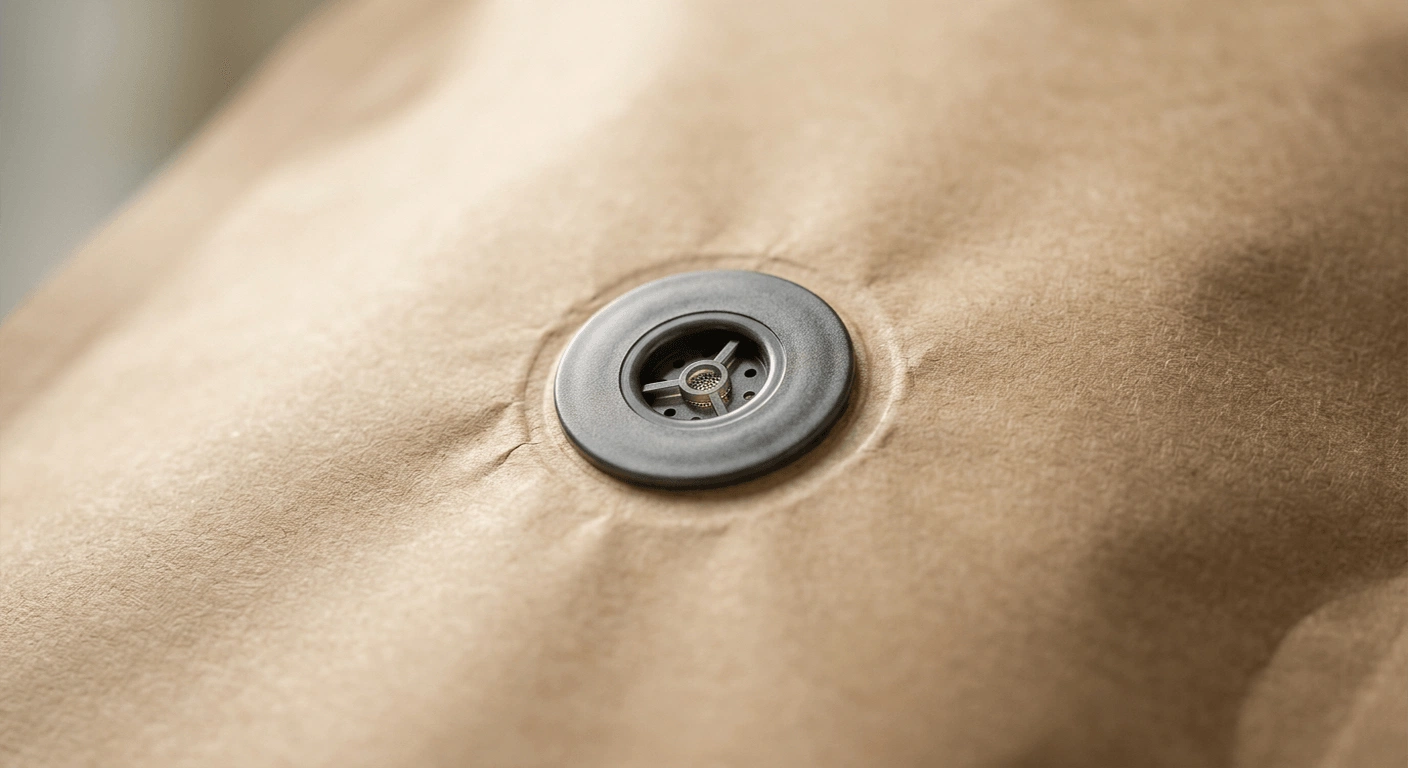
Unlike most foods, freshly roasted coffee actively releases carbon dioxide for several days to weeks after roasting. If you seal it in a standard airtight bag, the CO2 builds up, inflating the bag like a balloon, putting stress on the seals, and potentially causing it to burst. This is why coffee bags custom designs often feature one-way degassing valves.
The Material Battle: Selecting Barrier Layers
The core of flexible packaging coffee structure barrier films lies in the multi-layer lamination. Because no single plastic film can provide excellent barrier, sealability, and mechanical strength simultaneously, we must combine them.
Aluminum Foil (ALU): The Gold Standard
Aluminum foil is the most reliable barrier material available. When used in a structure like PET/ALU/PE, it provides an absolute barrier against light, oxygen, and moisture. The metal layer is pinhole-free and virtually impermeable.
-
Best for: Premium, high-end custom coffee bags targeting long shelf lives (12–18 months).
-
Limitation: Foil is susceptible to flex-cracking (forming tiny pinholes when folded sharply) and is difficult to recycle in standard municipal streams.
Metallized PET (MetPET): The Cost-Effective Workhorse
MetPET is a polyester film coated with a microscopic layer of vaporized aluminum. It offers excellent light and moisture barrier properties at a fraction of the cost of foil. The OTR of MetPET is typically ≤ 1.0 cc/m²/day, which is highly effective for medium-term storage.
-
Best for: Everyday commercial roasts and custom coffee bags wholesale orders where cost-efficiency is crucial, but flavor preservation is still a priority.
-
Limitation: The barrier layer is thin and can degrade if the film is highly stressed or folded.
EVOH: The Transparent High-Barrier Option
Ethylene Vinyl Alcohol (EVOH) is a copolymer with outstanding oxygen barrier properties when dry. Structures like PET/EVOH/PE offer high barrier performance while remaining transparent, allowing consumers to see the beans.
-
Best for: Specialty roasters who want a window to show off their beans, such as a custom coffee bag with a clear side panel.
-
Limitation: EVOH loses its oxygen barrier when exposed to high humidity. It must be sandwiched between moisture-barrier layers (like PE or PP) to function effectively.
Structural Engineering: Beyond the Barrier Layer
A functional custom coffee packaging solution requires more than just a barrier layer. The entire structure must work together:
-
Outer Layer (PET or BOPP): Provides printability, mechanical strength, and scuff resistance. This is where your branding comes to life on custom printed coffee bags.
-
Middle Layer (ALU, MetPET, or EVOH): The active barrier.
-
Inner Layer (PE or CPP): This is the food-contact layer. It provides the heat-sealability required to close the bag and acts as a moisture shield to protect the EVOH barrier if used.
The Degassing Valve: Integration is Key
A functional custom coffee packaging solution requires more than just a barrier layer. The entire structure must work together:
-
Outer Layer (PET or BOPP): Provides printability, mechanical strength, and scuff resistance. This is where your branding comes to life on custom printed coffee bags.
-
Middle Layer (ALU, MetPET, or EVOH): The active barrier.
-
Inner Layer (PE or CPP): This is the food-contact layer. It provides the heat-sealability required to close the bag and acts as a moisture shield to protect the EVOH barrier if used.
The Sustainability Challenge: Mono-Material vs. Multi-Material
The industry is facing a massive shift toward recyclability. Traditional high-barrier flexible packaging coffee structure barrier films use three incompatible materials (PET, ALU, PE), making them difficult to recycle.
The push is now toward Mono-PE or Mono-PP structures. Instead of foil, these structures use specialized coatings (like AlOx or SiOx) or high-barrier resins (like EVOH) blended into a single-material base.
-
The Trade-off: While Mono-PE bags are mechanically recyclable, achieving the exact same OTR and WVTR as an aluminum foil bag is challenging. However, for a growing number of brands, a slightly reduced shelf life (e.g., 9 months instead of 12) is an acceptable trade-off for packaging that aligns with a circular economy.
How Jili Packaging Supports Your Coffee Packaging Project
At Jili Packaging, we engineer flexible packaging coffee structure barrier films tailored to the specific protective challenges of your product.
Whether you need high-barrier PET/ALU/PE structures for long export journeys, MetPET for cost-effective retail packaging, or mono-material recyclable solutions for a sustainable brand identity, we provide the engineering support. We offer:
-
Material Engineering: Free structural design to balance barrier performance and cost.
-
Valve Integration: Precision application of one-way degassing valves with validated seal strength.
-
High-Precision Printing: 10-color printing to ensure your custom printed coffee bags look as good as they perform.
-
Quality Assurance: Strict OTR/WVTR testing, leak testing, and migration compliance (FDA, EU 10/2011) for food safety.
If you are evaluating flexible packaging coffee structure barrier films for your next roast, Contact Jili Packaging to discuss your requirements and request physical samples. We help you translate the complex science of barrier films into a package that protects your product and elevates your brand on the shelf.


