

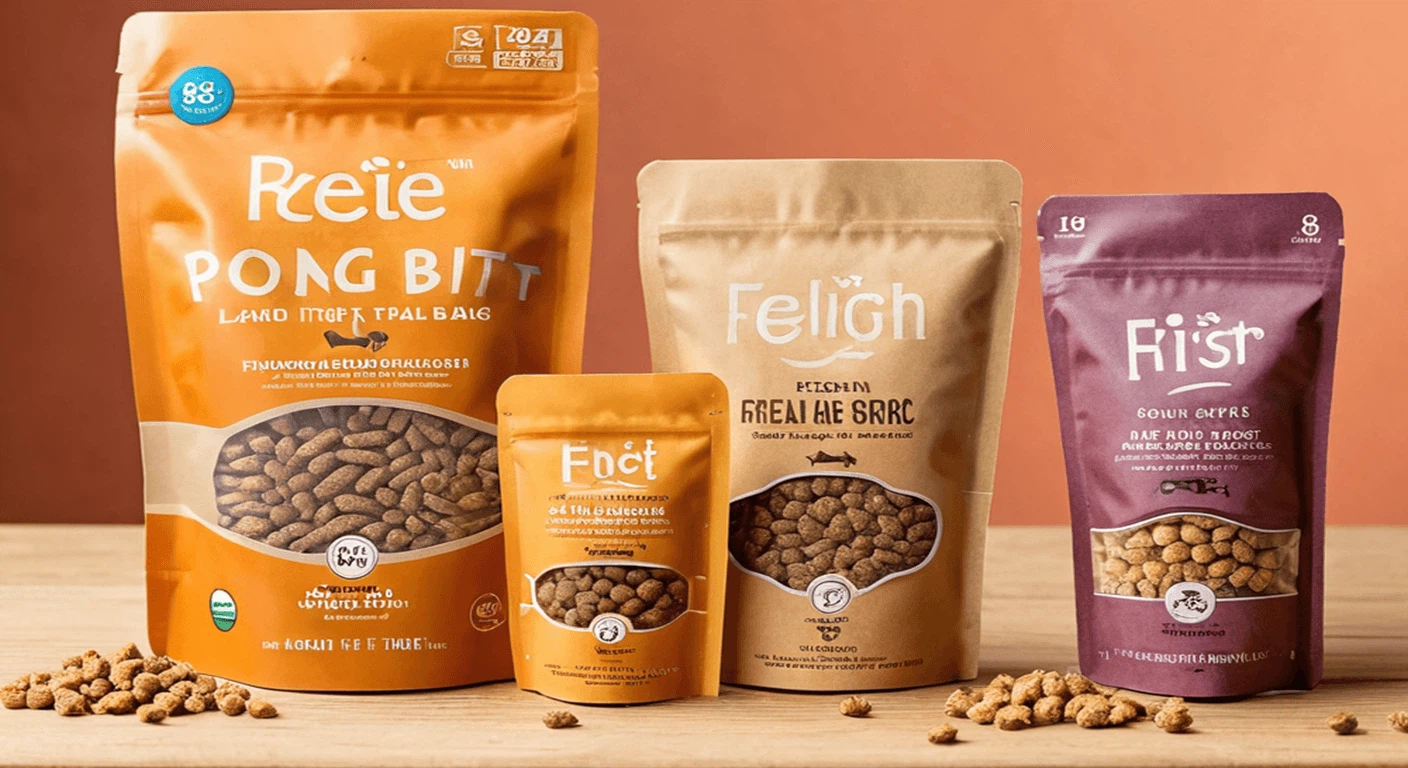
This guide breaks down the material engineering behind wet pet food pouches, dry food bags, and treat packaging. It explains what each format demands from the film structure, which materials are commonly used, and where the industry is heading on sustainability.
The Three Fronts of Pet Food Packaging
The global pet food packaging market was valued at USD 11.36 billion in 2025 and is projected to reach USD 19.4 billion by 2035, growing at a CAGR of 5.6%. Flexible plastics represented USD 4.71 billion of that market in 2025, and pouches and bags alone reached USD 5.62 billion. Growth is driven by premiumization, e-commerce, and a shift toward single-serve and resealable formats.
But the technical requirements vary sharply by product type:
-
Wet food (pouches, trays, cans): Requires heat resistance for retort sterilization, hermetic seals, and barrier protection after processing.
-
Dry food (kibble, biscuits): Requires moisture and oxygen barrier to prevent rancidity and loss of crunch, plus mechanical strength for larger bag sizes and distribution.
-
Treats (jerky, soft chews, freeze-dried): Requires aroma retention, portion control, and consumer-friendly opening and resealing features.
A film that performs well for dry kibble will fail catastrophically in a retort. A retort-grade laminate is usually over-engineered and unnecessarily expensive for treats. The structure must match the process.
Wet Pet Food Pouches: Surviving the Retort
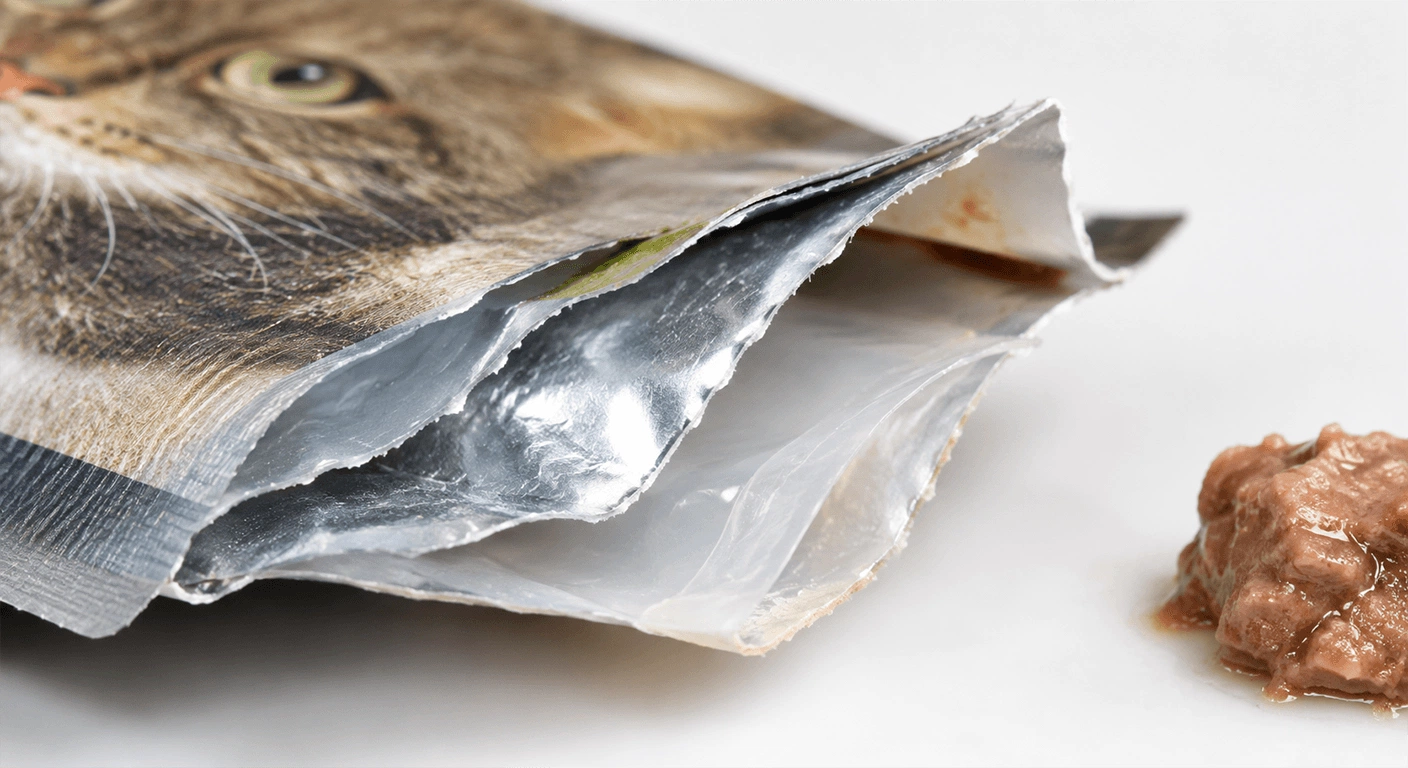
Wet pet food pouches are the most technically demanding format in the category. The pouch is filled with product, sealed, and then sterilized in a retort vessel at temperatures typically ranging from 120°C to 130°C for extended periods. Some high-performance applications require resistance up to 135°C or even 160°C. During this process, the film must not delaminate, deform, or lose seal integrity.
The Core Challenge: Retort Shock and Barrier Loss
Many high-barrier polymers behave differently after retort exposure. EVOH, for example, is an excellent oxygen barrier in dry conditions, but under high-temperature, high-humidity retort conditions it can experience “retort shock”—its barrier properties degrade significantly. This is why not every high-barrier film is suitable for wet pet food pouches.
The industry solution is to use retort-grade materials and structures that maintain barrier performance after processing. The target is often an oxygen transmission rate below 1 cc/(m²·day) after retort. Some advanced full-PE high-barrier pouches have achieved OTR below 0.5 cc/(m²·day) and water vapor transmission rate below 2 g/(m²·day), specifically designed to maintain barrier performance through retort while remaining recyclable.
Common Structures for Wet Pet Food Pouches
Material selection depends on transparency and light-barrier requirements:
| Requirement | Common Structure | Key Properties |
|---|---|---|
| Light-proof, maximum barrier | PET/AL/NY/RCPP | Aluminum foil blocks light and oxygen; nylon adds puncture resistance; RCPP provides retort-grade sealant |
| Transparent, recyclable | PET/NY/RCPP | No foil; relies on PET and NY for strength and barrier; RCPP sealant |
| High-barrier transparent | ALOXPET/NY/RCPP | AlOx coating on PET provides transparent oxygen barrier; suitable for premium visible-product formats |
The inner sealant layer is almost always RCPP (retort cast polypropylene) or a specialized retort-grade PE. Standard PE and LDPE cannot withstand 130°C retort conditions without deformation or seal failure. Adhesives and inks must also be retort-grade; standard laminating adhesives can delaminate or cause ink migration under heat and pressure.
Seal Integrity and Puncture Resistance
A wet pet food pouch must survive not only the retort but also the handling that follows. Nylon (NY/ONY) is commonly included in the structure to provide puncture resistance and flex-crack resistance. The seal geometry—seal width, seal bar temperature, and dwell time—must be validated against the specific retort cycle. A seal that looks intact visually may fail under pressure.
Dry Pet Food Packaging: Moisture, Oxygen, and Mechanical Strength
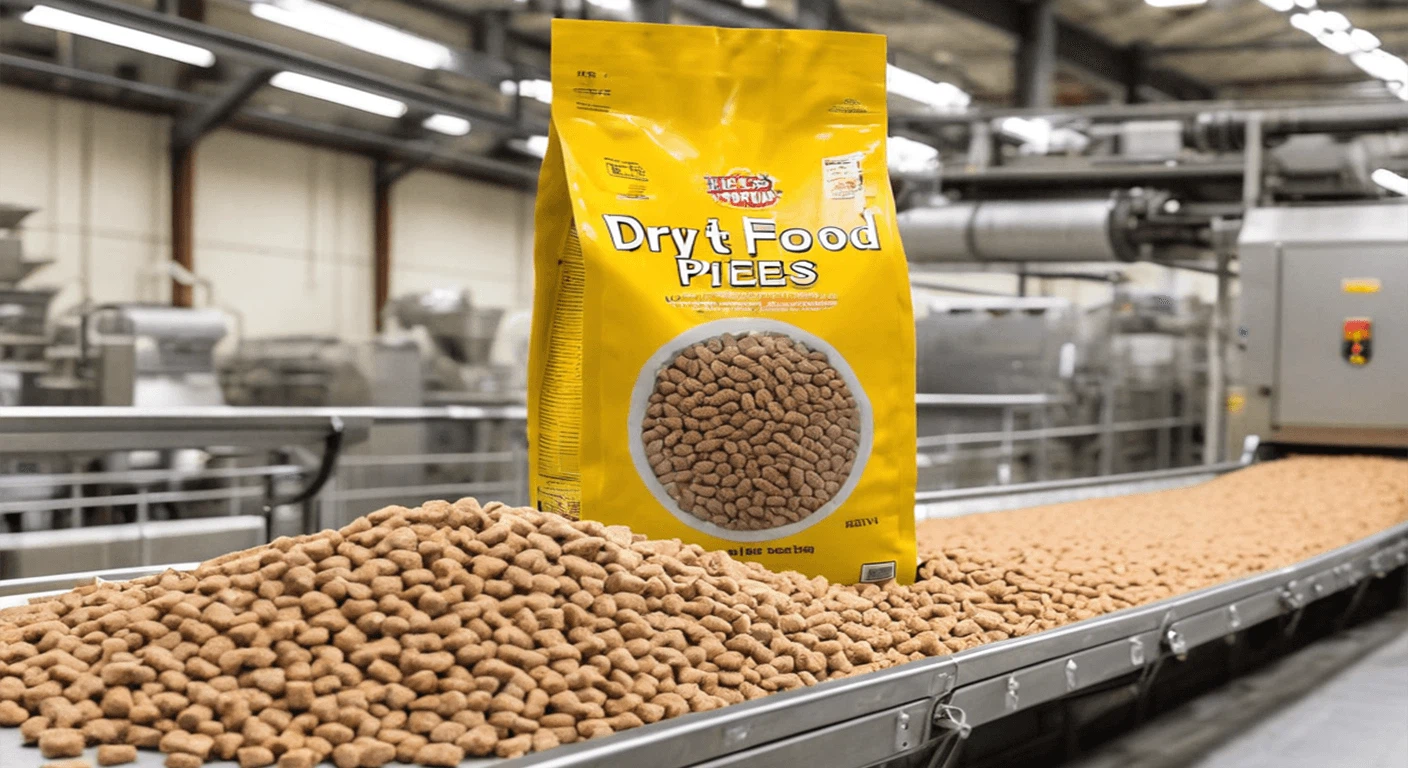
Dry pet food is shelf-stable, but it is not indestructible. Kibble absorbs moisture, loses crunch, and oxidizes. The packaging must provide a moisture barrier, an oxygen barrier (to prevent fat rancidity), and sufficient mechanical strength to handle bag weights from 1kg to 15kg or more.
Barrier Requirements
Dry pet food packaging typically targets an OTR low enough to prevent oxidative rancidity and a WVTR low enough to prevent moisture ingress. Metallized films are widely used because they offer a strong barrier at a lower cost and lower material complexity than aluminum foil.
Recent developments have introduced Ultra High Barrier (UHB) metallized BOPP films specifically for dry pet food and treats. These films are designed as a sustainable replacement for aluminum foil, delivering robust oxygen and moisture barrier performance while simplifying the material structure. Coated metallized BOPET films are also used for sensitive dry and wet applications.
Structural Considerations for Larger Bags
Dry food bags are often larger and heavier than wet pouches or treat packs. The structure must provide stiffness, tear resistance, and drop strength. A common approach is a reverse-printed PET or BOPP outer layer, a metallized or foil barrier layer, and a PE sealant layer for strong heat seals and puncture resistance. Gusseted and flat-bottom formats add structural integrity and shelf stability for larger pack sizes.
Pet Treat Packaging: Convenience, Aroma, and Portion Control
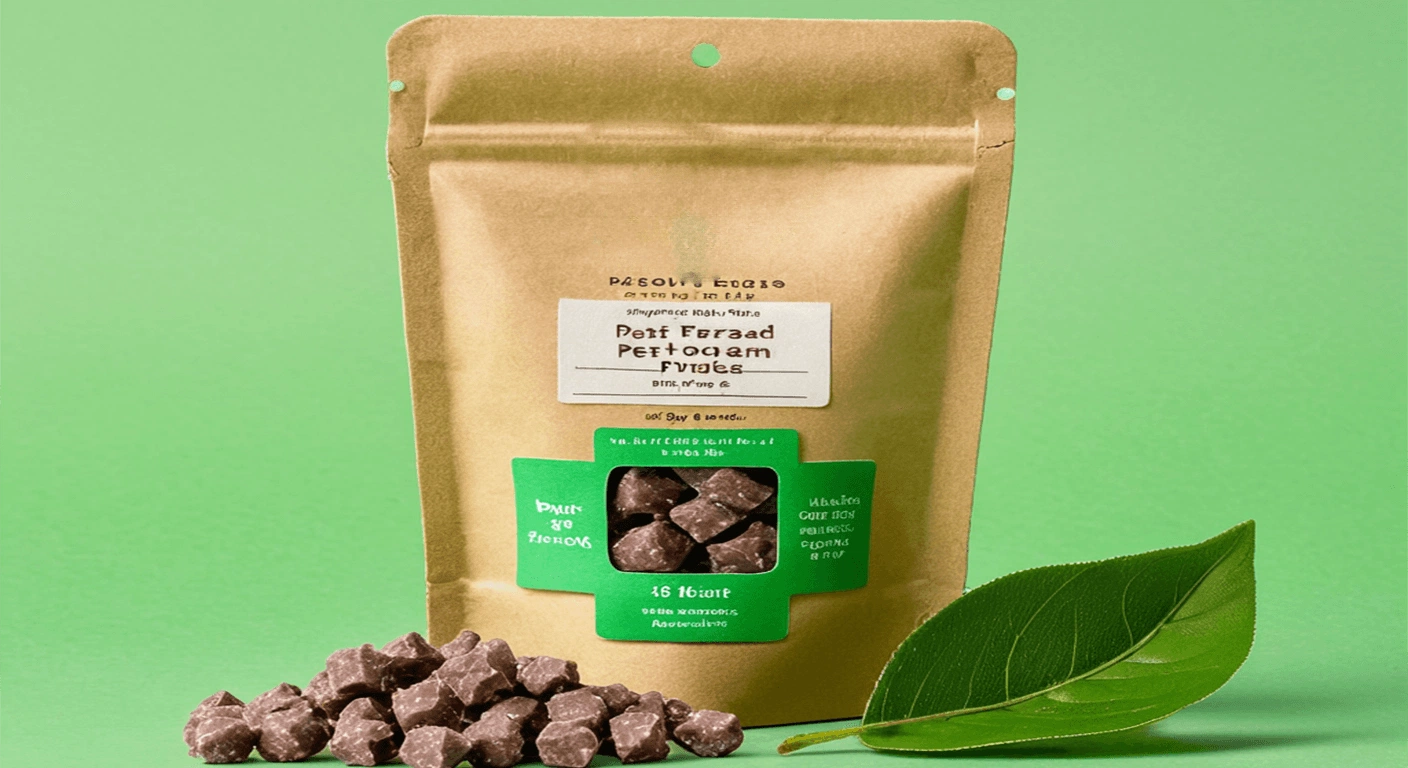
Treat packaging sits between wet and dry formats in technical demand, but it places a higher premium on consumer experience. Pet food packaging for treats must preserve aroma, protect fragile textures (freeze-dried pieces, soft chews), and offer easy opening and resealing.
Easy-Tear Notches and Reclosable Features
Tear notches are a standard requirement for treat pouches. The notch must initiate a clean tear without compromising the barrier. Mono-material PP and PE structures can be engineered for good tear propagation from a notch, ensuring easy opening without the need for scissors. Resealable zippers are also common for multi-serve treat bags, keeping contents fresh between uses.
High-Barrier Films for Treat Freshness
Treats such as jerky, soft chews, and freeze-dried pieces are sensitive to moisture and oxygen. High-barrier composite films are used to preserve texture and flavor. For premium or transparent treat packs, clear high-barrier films (AlOx-coated PET or OPP) allow product visibility while maintaining barrier.
The Sustainability Shift: Mono-Material and Recyclable Pouches
Sustainability is reshaping pet food packaging across all three categories. The shift toward mono-material recyclable pouches is driven by regulatory pressure on recyclability and consumer demand for environmentally responsible packaging. The EU’s packaging regulations are accelerating this transition, and brands are replacing multi-material laminates with single-material alternatives that meet recycling thresholds.
Mono-Material Solutions by Format
-
Wet food: Mono-PP retort pouches are in development and early commercialization. A mono-PP laminate with a ceramic barrier has been shown to provide excellent oxygen and water vapor protection without aluminum, enabling gentler sterilization while maintaining shelf life. The challenge remains matching the thermal and barrier performance of foil-based structures at competitive cost.
-
Dry food: Polyethylene (PE) thrives in mono-material designs for dry food bags. A French pet food company recently partnered with a packaging supplier to launch recyclable mono-material bags for dry pet food, replacing traditional multi-material plastic. High-barrier full-PE pouches have achieved OTR < 0.5 and WVTR < 2, demonstrating that recyclability and barrier performance can coexist.
-
Treats: PP mono-material transparent barrier OPP films are already used for dry pet care and treats, offering high clarity, good tear propagation, and recyclability in PP streams.
Recycled content is also entering the category. A major pet food brand recently incorporated 30% certified circular PP into its wet food pouches, reducing virgin plastic use by approximately 25% while passing retort and organoleptic testing.
Matching Structure to Product: A Decision Framework
When evaluating pet food packaging for a new product, the structure should be selected based on four variables:
-
Process: Does the product require retort sterilization (wet food), or is it shelf-stable as filled (dry/treats)? Retort demands RCPP sealants, retort-grade adhesives, and barrier layers that survive heat and moisture.
-
Shelf life target: Longer shelf life requires higher barrier. Foil provides near-absolute barrier; metallized films and AlOx coatings offer strong barrier with lighter structures.
-
Mechanical demands: Bag weight, distribution method, and e-commerce shipping determine puncture resistance, drop strength, and seal width requirements.
-
Consumer experience and sustainability: Resealable zippers, tear notches, and transparent windows affect material selection and structure complexity. Mono-material options should be evaluated early if recyclability is a brand priority.
How Jili Packaging Supports Pet Food Brands
At Jili Packaging, we engineer flexible structures for the full spectrum of pet food packaging—from retort-grade wet pet food pouches to high-barrier dry food bags and consumer-friendly treat packs.
Our capabilities include:
-
Retort-grade structures: PET/AL/NY/RCPP, ALOXPET/NY/RCPP, and mono-material retort options, with retort-grade adhesives and inks validated for 121–135°C processing.
-
High-barrier dry food films: Metallized BOPP and BOPET structures, including UHB options designed to replace foil while maintaining moisture and oxygen barrier.
-
Treat packaging: Easy-tear notches, resealable zippers, hang holes, and high-clarity barrier films for visible product presentation.
-
Material engineering: Structure selection based on retort conditions, shelf-life targets, and mechanical requirements—not a one-size-fits-all catalog.
-
Testing and validation: Seal strength, leak, and barrier testing to confirm performance before mass production.
Request a Quote — Contact our team to discuss your pet food packaging requirements and request samples.
Whether you are launching a new wet food line, scaling a dry food brand, or redesigning treat packaging for recyclability, we can help match the structure to the product. Contact Jili Packaging to start your project.


